JSWAY | Leading CNC Lathe Manufacturer & Supplier Since 2007



CNC Machine Inspection Methods -
A Practical Guide to Accuracy Testing
| Two-axis CNC lathes | Turn-mill centers | Swiss-type CNC lathe | |
| General | A two-axis small-to-medium CNC lathe usually refers to a CNC lathe with X-axis and Z-axis only, typically capable of handling workpieces with diameters from a few dozen millimeters up to around 300 mm. Its structure is relatively simple, its footprint is small, and its programming and setup are easier than those of multi-axis or twin-spindle machines. It is mainly used for turning rotational parts such as shafts, discs and bushings. | A small-to-medium turn-mill center typically refers to a CNC lathe with a swing diameter around Φ50–300 mm, equipped with a C-axis, live tool turret, and Y-axis. When fitted with a BMT turret, the tool interface uses a bolted flange connection, offering better rigidity than traditional VDI quick-change interfaces. With an interpolated Y-axis, the machine can perform off-center milling, side drilling, keyways, polygons and other compound operations. The Y-axis may be a physical linear axis, or a virtual axis generated by synchronized X/C-axis interpolation. | A Swiss-type CNC lathe, also called a sliding headstock lathe or Swiss-type automatic lathe, is a precision turning machine designed mainly for small-diameter, long and slender parts. Unlike a conventional CNC lathe where the workpiece is clamped and the tool moves, a Swiss lathe moves the bar stock along the Z-axis through a guide bushing, while the cutting tools remain close to the support point. This gives excellent rigidity and makes it especially suitable for high-precision, high-volume production of small rotational and compound parts. |
| Key features | Two-axis motion: The X-axis controls radial tool movement, and the Z-axis controls longitudinal tool movement along the workpiece axis.1 Compact structure: Suitable for small workshops, sample production, and small-batch export orders. Covers common turning operations: External turning, boring, facing, taper turning, grooving, threading and drilling.1 Moderate automation: Can be equipped with hydraulic chucks, automatic turrets, tailstocks and bar feeders, but usually does not have Y-axis, C-axis or live tooling, so milling and off-center drilling capabilities are limited. |
Higher rigidity with BMT turret: BMT55 is suitable for aluminum and light-to-medium milling on small steel parts; BMT65 provides higher torque and rigidity, making it better for stainless steel, alloy steel, larger milling cutters and deeper slots.79 Y-axis enables off-center machining: Unlike a standard two-axis lathe, a Y-axis allows the tool to move away from the spindle centerline for eccentric holes, side slots, flats and polygonal features.1123 Interpolated Y-axis adds flexibility: It can work with the C-axis to mill contours, curved slots, eccentric circles and irregular end faces. However, if the machine uses a virtual Y-axis, heavy-cutting performance depends heavily on turret overhang and structural rigidity.24 Complete multiple operations in one setup: External turning, facing, boring, grooving and threading can be combined with milling, drilling, tapping and eccentric features. Compact size suits export customers: Smaller footprint and moderate investment make it attractive for automotive, hydraulic, valve and general-machinery customers, especially for sampling and small batches. |
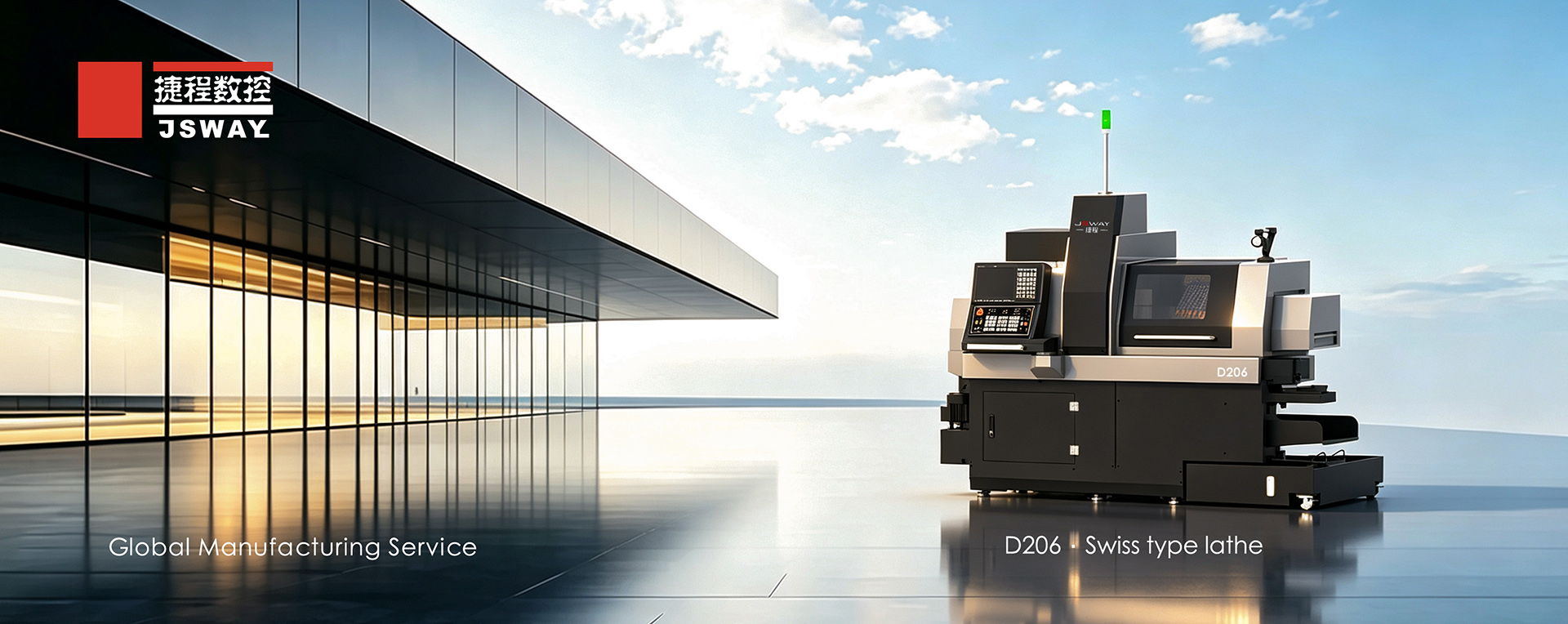
Guide bushing support: The bar stock is supported very close to the cutting point, reducing deflection and vibration, especially for slender parts. Sliding headstock: The spindle headstock moves the material axially, while the tools perform radial and axial cutting. Turn-mill compound capability: Can perform turning, milling, drilling, boring, tapping, grooving and engraving in one setup. Multi-axis configuration: Commonly 7–13 axes, with options for dual spindles, sub-spindles, live tools and Y-axis functions. Automatic bar feeding: Works with bar feeders for continuous, 24-hour production. Small working diameter: Typical maximum bar diameters are around φ12 / φ20 / φ25–26 / φ32 / φ38 mm, rarely above φ42 mm. |
| Main advantages | Lower purchase and maintenance cost compared with multi-axis turn-mill centers or twin-spindle lathes.13 Easier programming and operation, as most parts can be machined with standard G-code. Well suited for small batches and prototyping, with relatively quick changeover and setup. Small footprint and lower power demand, making it attractive for customers with limited workshop space. Sufficient accuracy for many conventional parts, especially when high coaxiality or complex multi-face machining is not required. |
Fewer machines and less labor: One machine can replace separate turning and milling/drilling steps, reducing handling, fixtures and cycle time.1016 Better accuracy stability: Fewer re-clampings help maintain coaxiality, position tolerance and hole-pattern accuracy.1016 BMT interface supports heavier milling: Compared with VDI, BMT's flanged bolted connection is more stable for long-term machining of steel, stainless steel, valve bodies and flanges.79 Flexible export configuration: Buyers can choose BMT55 or BMT65, and select either a true Y-axis or an interpolated Y-axis according to drawing requirements and budget. Well suited for high-mix, small-batch production: Faster changeover supports export customers with frequent drawing updates and unstable batch sizes. |
Excellent accuracy for slender parts: Ideal for high length-to-diameter ratio components, often 10:1 or higher. One-setup machining: Reduces re-clamping errors and improves coaxiality, position tolerance and batch consistency. High efficiency: Multiple tool stations and dual spindles allow simultaneous operations and shorter cycle times.21315 Good surface finish: Stable cutting conditions suit stainless steel, copper, aluminum, titanium and other precision materials. Lower labor cost: High automation allows one operator to run multiple machines. Strong export appeal: Widely used in medical, electronics, automotive, hydraulic and precision hardware industries. |
| Typical applications | Shaft parts: transmission shafts, pins, connecting shafts, miniature shafts. Bushing and disc parts: bushings, flanges, spacers, bearing housings, fittings. Hydraulic and pneumatic components: valve cores, connectors, cylinder end faces, threaded parts. Automotive and motorcycle components: small shafts, sleeves, fastener blanks. Electronics and hardware: terminals, miniature connectors, small metal parts. Training and prototyping workshops: CNC training, sample making, and small-batch production. |
Hydraulic and pneumatic parts: valve cores, valve bodies, connectors and flanges with eccentric or side holes. Transmission shafts: shafts with keyways, milled flats, radial holes and multi-step profiles. Automotive and motorcycle components: steering pins, connecting shafts, flanges and irregular fittings. Pump, valve and fastener parts: eccentric threaded seats, hex heads and special nut blanks. Electronics hardware and general machinery: small rotational parts with side holes, side slots or eccentric steps. Export sampling and small batches: ideal when customers want complex parts finished without transferring between multiple machines. |
Medical devices: bone screws, dental implants, surgical instruments, miniature connectors. Electronics connectors: pins, terminals, micro shafts, SIM card trays, small housings. Automotive and hydraulic parts: injector components, sensor shafts, small valve cores, fittings. Watchmaking and precision hardware: miniature gears, pins, screws, special small shafts. Aerospace and liquid-cooling connectors: precision shafts, sealing joints, miniature fasteners. High-volume small-part OEM: ideal for export orders involving small diameters, long bar stock, multiple operations and tight tolerances. |
| Limitations and selection notes | This type of lathe is not ideal for parts requiring multi-face milling, eccentric holes, complex contours, or complete front-and-back machining in one setup. If customers have high batch volumes, strict coaxiality requirements, or need continuous machining on both ends, a machine with Y-axis, C-axis, live tooling, or a twin-spindle configuration may be more suitable. | For aluminum parts, light milling and small holes, BMT55 with an interpolated Y-axis is often sufficient. For frequent machining of stainless steel, alloy steel, deep slots or large cutters, BMT65 is recommended, and buyers should confirm Y-axis travel, turret torque and machine rigidity. It is also important to distinguish between a true Y-axis and a virtual interpolated Y-axis: a true Y-axis usually offers better rigidity and more intuitive programming, while a virtual Y-axis may reduce cost but can be limited in heavy-cutting capability and working range. | Not suitable for large-diameter parts: Generally limited to below φ38 mm; larger parts are better handled by chuck-type turn-mill centers.5 Mainly processes long bar stock: Not ideal for stamped, forged, cast or irregular short blanks.5 Requires good bar quality: Bar straightness and roundness directly affect guide bushing performance and part accuracy. Single-spindle models may leave tail marks: Dual-spindle machines can machine the cut-off face and reduce burrs. Higher maintenance requirements: Guide bushings, collets, spindles and bar feeders need regular calibration and care. |
Quick Decision Table
| Workpiece characteristics | Recommended machine | Reason |
| Diameter below 38 mm, slender, high L/D, high volume | Swiss-type lathe | Guide bushing controls deflection; multi-axis compound machining in one setup |
| Diameter above 40 mm, with flats, keyways, radial/eccentric holes | Turn-mill center with BMT + Y-axis | Completes turning and milling in one clamping; avoids re-fixturing errors |
| Simple shaft, sleeve or disc; low complexity | 2-axis CNC lathe | Lowest investment; simple programming; suitable for trial orders and general batches |
| High-mix, small batches; frequent drawing changes | Turn-mill center | Strong flexibility; faster changeover; fewer special fixtures |
| Very small diameter, high precision, mass production | Swiss-type lathe | Excellent consistency; low labor cost; suitable for lights-out production |
Practical Suggestion for Customer Communication
When a customer sends a drawing, confirm these items first: Maximum diameter, total length, length-to-diameter ratio, critical tolerances, main non-turning features, material, blank form, annual quantity, and target cycle time. With this information, you can quickly classify the part:
▶ Small, slender, high-volume bar-stock part → Swiss-type.
▶ Medium size, complex features, needs milling/drilling/eccentric machining → turn-mill center.
▶ Simple rotational part, low complexity, cost-sensitive → 2-axis CNC lathe.
For export quotations, it is also useful to prepare two options, such as "standard 2-axis solution" and "turn-mill one-setup solution", or "Swiss-type high-volume solution" and "turn-mill flexible solution". This makes it easier for customers to compare cost, accuracy and delivery risk.
• Part drawing or 3D file, preferably in PDF, STEP or IGES format.
• Part size, including maximum diameter, length and weight.
• Material, such as aluminum, stainless steel, carbon steel, brass, titanium or plastic.
• Blank form, such as bar stock, forged blank, cast blank or machined preform.
• Key features, such as threads, deep holes, eccentric holes, flats, keyways, thin walls or tight tolerances.
• Annual quantity and batch size, to judge whether high automation is needed.
• Target tolerance and surface finish, especially for critical dimensions.
• Required operations, such as turning, milling, drilling, tapping, grinding or secondary machining.
• Factory conditions, including available power, floor space, coolant system and operator skill level.
• Budget range and delivery expectation, so the recommendation can match both technical and commercial requirements.
With this information, JSWAY can propose a more accurate machine type, configuration and quotation, and avoid over-specifying or under-specifying the equipment.
Our goal is to become a well-known brand CNC lathe machine manufacturer in China, specializing in the production of high-precision multi-functional small and medium-sized CNC machine tools, to achieve reliable quality, performance and international standards, product expertise, multi-functional milling and laminating. CNC lathe for sale, contact us!